Balayage vs. Highlights: What's the Difference?
Balayage and highlights are two of the most requested colour services at Elika Beauty, and also two of the most confused. Both lighten hair, but the technique, the look, the maintenance schedule, and even the price can differ enough that picking the wrong one means redoing your plan at your next appointment.
Technique
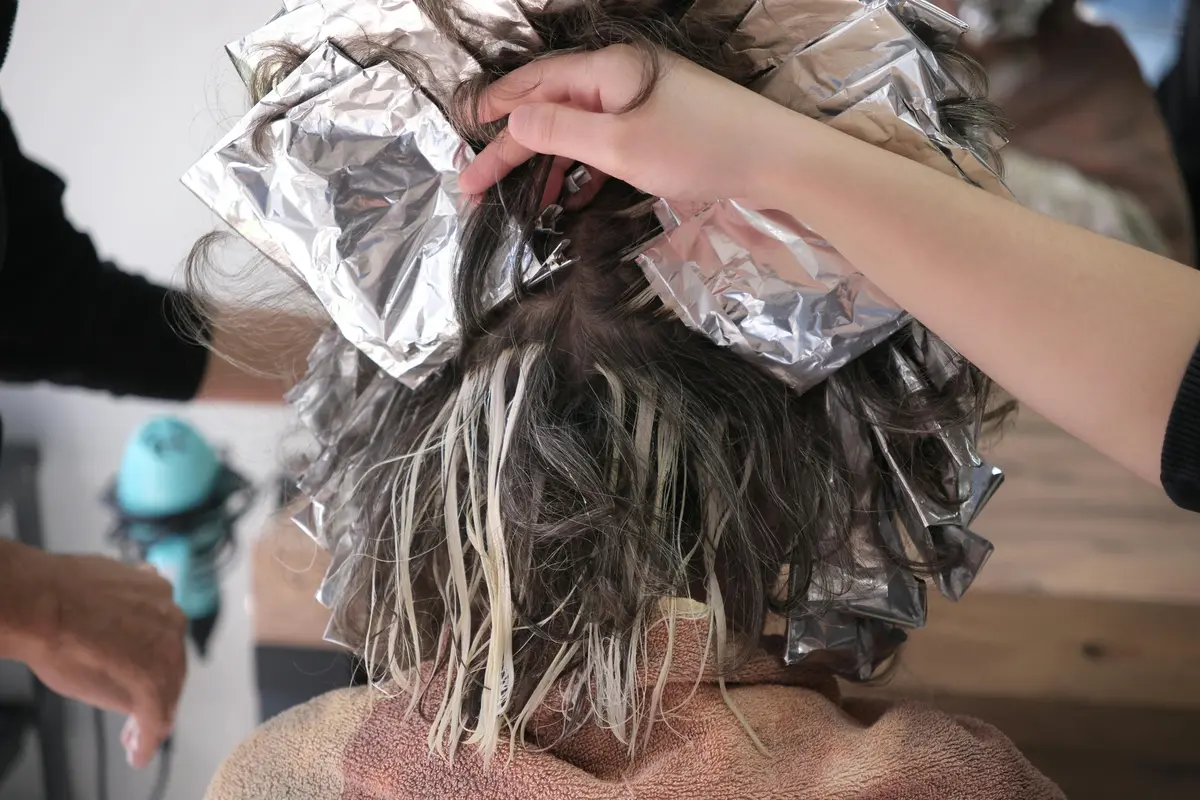
Highlights are foiled: small sections are isolated, painted with lightener, and wrapped so the product processes in a sealed, controlled environment. This gives the colourist precise control over exactly how much hair lightens and by how much. Balayage is freehand — lightener is hand-painted directly onto the surface of the hair in sweeping strokes, with no foil. Because it's applied by hand rather than isolated in foil packets, balayage naturally blends into the hair around it, which is what gives it that soft, sun-kissed look instead of the more graphic, striped pattern foils can create. Both techniques use the same lightening products — the difference is entirely in how the product is placed.
Result
Foil highlights create stronger, more even contrast throughout the head, because each foiled section lifts to roughly the same level in a controlled environment. The result reads brighter and more uniform, which is exactly the point for clients who want a noticeable colour change. Balayage results are softer and less uniform by design — some pieces lift more than others, creating a graduated, dimensional look rather than a flat block of colour. If you've heard balayage described as "lived-in" colour, this is why: it's meant to look like hair that's naturally sun-lightened over a season, not freshly done.
Cost at Elika Beauty in Burnaby
At Elika Beauty, highlights start from $200 and balayage starts from $220, with a base colour sometimes recommended from $70 depending on your starting point, grey coverage, or tone balancing needs. Both services run about 2.75 hours as a baseline — the appointment itself isn't inherently longer for one technique over the other. What actually changes the time (and the price) is your hair's length and thickness and whether you're booking a partial or full head, since more hair means more sections to paint or foil either way. A consultation gives you an exact number before you commit.
Maintenance
This is where balayage usually wins for anyone who doesn't want to be back in the chair every six weeks. Because the regrowth line on balayage is deliberately soft and uneven, it can often go three to four months between appointments before it looks like it needs attention. Foil highlights have a more visible, defined line where your natural colour starts, so most clients rebook every six to eight weeks to keep it looking fresh. If your schedule or budget doesn't allow for frequent salon visits, that difference alone can make the decision for you.
Partial vs Full
Both techniques can be done as a partial or full application. A partial service — usually around the face, crown, or top layers — costs less and takes less time, and is a good way to test a technique before committing to a full head. A full head covers the entire canopy of hair, giving more overall dimension but taking longer and costing more. Many clients start with a partial balayage or partial highlight and build up to a full head over a few appointments as they get used to the upkeep.
Lowlights & Babylights
Lowlights add depth rather than lift — a slightly darker shade woven through the hair to create contrast against lightened pieces, often used alongside either balayage or highlights to stop the result from looking flat or one-dimensional. Babylights are a finer, more subtle version of foil highlights, using very thin sections for a soft, natural-looking brightness closer to how hair lightens gradually in the sun. Both are add-on techniques rather than standalone services, and your stylist will usually suggest one if your colour needs more dimension than a single technique alone can give.
Best option for dark or Asian hair
Dark brunette and black hair, including many Asian hair types, can take more processing time to reach a lighter level because there's more natural pigment to lift through. Balayage tends to be the gentler starting point here, since the freehand technique lets your stylist control exactly how much lift each section gets without pushing the whole head to the same level in one sitting — useful for avoiding brassy or orange tones that can show up more visibly against a dark base. Highlights are still possible on dark hair, but may need to be done in stages, especially if you're going several shades lighter than your natural colour. A consultation is the best way to map out a realistic plan and timeline.
Can you switch from highlights to balayage?
Yes, and it's actually a common switch. Clients who are tired of maintaining a hard foil line every six weeks often transition to balayage, since the existing foiled colour blends into the new freehand painting rather than needing to be stripped out first. The transition usually looks best over two to three appointments rather than one, especially if there's a noticeable gap between your current foils and your natural colour. Your stylist can talk through timing at a consultation.
Which is right for you
If you want bright, structured contrast and don't mind more frequent salon visits, highlights are the stronger fit. If you want a softer, lower-maintenance result that grows out gracefully, balayage is usually the better call. Many clients also combine both — foils for brightness where it shows most, balayage everywhere else — rather than treating it as an either-or choice. If your concern is grey hair specifically rather than an all-over colour change, grey blending uses the same two techniques in a more targeted way — worth asking about at your consultation. The honest answer depends on your hair, your schedule, and how much upkeep actually fits your life.
FAQ
Is balayage more expensive than highlights?
Usually, yes, though the gap is often smaller than people expect. At Elika Beauty, highlights start from $200 and balayage starts from $220 — both run about 2.75 hours as a baseline appointment, so the price difference isn't really about one technique taking longer than the other.
How long does balayage last?
Balayage typically holds its look for 3–4 months before a refresh is needed, thanks to its soft, gradual grow-out. Highlights usually need attention again in 6–8 weeks, since the foiled regrowth line is more defined.
Balayage vs ombré vs highlights — what's the difference?
Highlights are foiled sections throughout the hair for even contrast. Balayage is hand-painted for a soft, blended look. Ombré is a gradual dark-to-light transition concentrated mostly at the ends, with less blending through the mid-lengths than balayage. All three can be combined depending on the result you want.
Which is better for grey hair?
Both can work, depending on how much grey you have and how it's distributed. Scattered, lighter grey often blends well into balayage. Heavier, more concentrated grey at the part or temples sometimes needs foiled highlights for a cleaner blend. This specific use case is sometimes called grey blending — a consultation is the best way to check which technique suits your pattern.
How long does each appointment take?
Both balayage and highlights run about 2.75 hours as a baseline appointment at Elika Beauty. Either can take longer depending on your hair length, thickness, whether you're booking a partial or full head, and how much lightening is needed — your stylist will give you a specific estimate at booking.
Related reading
Ready to book?
Elika Beauty · 3790 Canada Way #102, Burnaby · Tue–Sat 10am–6pm